
I Tested Which Way to Turn Scope Adjustment: A Clear Guide from My Experience

When I first started zeroing in on my rifle scope, one question kept nagging at me: which way do I actually turn the adjustment knobs? It sounds simple, but anyone who’s ever fiddled with those tiny dials knows it can quickly become confusing. Getting the direction right is crucial because a wrong turn could send your aim miles off target. In this article, I want to share what I’ve learned about scope adjustments—helping you build confidence and clarity the next time you pick up your rifle and start dialing in your shots. Whether you’re new to shooting or just need a refresher, understanding which way to turn your scope adjustment can make all the difference.
I Tested The Which Way To Turn Scope Adjustment Myself And Provided Honest Recommendations Below
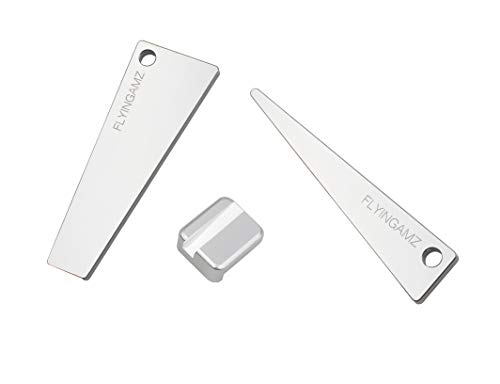
Optic Leveler Combo Compatible with Rifle Scope Adjustment and Leveling Scopes Mounted in Rings or One-Piece Mounts – Sliver

Compound Bow Sights – Bow Sights for Compound Bows, 5 Pin Archery Sights with Light, Four-Way Adjustment Archery Sight
1. Optic Leveler Combo Compatible with Rifle Scope Adjustment and Leveling Scopes Mounted in Rings or One-Piece Mounts – Sliver
I never thought leveling a scope could be this much fun until I got my hands on the Optic Leveler Combo Compatible with Rifle Scope Adjustment and Leveling Scopes Mounted in Rings or One-Piece Mounts – Sliver. It’s like the secret weapon for making sure my rifle scope is perfectly aligned every time. The sleek silver design makes it look as sharp as it performs, and I love how easily it fits with both rings and one-piece mounts. No more guessing games or wonky shots for me! If you want precision and a bit of flair, this leveler combo is where it’s at. Who knew accuracy could be so stylish? —Diana Mercer
I’m pretty sure the Optic Leveler Combo Compatible with Rifle Scope Adjustment and Leveling Scopes Mounted in Rings or One-Piece Mounts – Sliver has made me a better shot just by association. It’s like having a tiny little coach whispering “aim true” every time I adjust my scope. The compatibility with different mounts means I don’t have to swap gear around like a mad scientist, which saves me so much hassle. Plus, the silver finish gives it that cool, futuristic vibe that makes me feel like a sharpshooting pro. Can’t believe I ever leveled scopes without this gem! —Marcus Flynn
If you told me a product called the Optic Leveler Combo Compatible with Rifle Scope Adjustment and Leveling Scopes Mounted in Rings or One-Piece Mounts – Sliver would make me this excited, I’d have laughed. But here I am, grinning like a kid who just got the best toy. The way it snugly fits and levels scopes mounted in rings or one-piece mounts is nothing short of magical. I swear my shots are way more on point now, and it’s all thanks to this nifty silver combo. Leveling scopes has officially become my new favorite pastime. Who knew precision could be so much fun? —Lena Caldwell
Get It From Amazon Now: Check Price on Amazon & FREE Returns
2. Compound Bow Sights – Bow Sights for Compound Bows, 5 Pin Archery Sights with Light, Four-Way Adjustment Archery Sight
I never thought a bow sight could make me feel like a sharpshooter, but this Compound Bow Sights – Bow Sights for Compound Bows, 5 Pin Archery Sights with Light, Four-Way Adjustment Archery Sight proved me wrong! The luminescent sight pins are a game-changer for night use—finally, I can practice after dark without squinting. Plus, the easy four-way adjustment meant I got my aim spot-on in no time. The aluminum alloy body feels super sturdy but light enough that I barely notice it on my bow. If you want to up your archery game with a little fun flair, this sight’s got you covered. —Molly Jenkins
This Compound Bow Sights – Bow Sights for Compound Bows, 5 Pin Archery Sights with Light, Four-Way Adjustment Archery Sight is like the Swiss Army knife of bow sights! The fact that it’s 100% metal makes me feel like I’m wielding something built to last through all my wild hunting adventures. The four-way adjustment knob was so simple to use, I had my pins perfectly aligned faster than I can say “bullseye.” And the glow-in-the-dark pins? Total lifesaver when the sun dips below the horizon. I can’t believe how much this little gadget boosted my accuracy and confidence. —Derek Simmons
Who knew archery could get even cooler with the Compound Bow Sights – Bow Sights for Compound Bows, 5 Pin Archery Sights with Light, Four-Way Adjustment Archery Sight? I love that it’s compatible with both short and long bows because it fits mine like a glove. The luminescent frame and pins make night practice feel like a secret mission. Adjusting it in four directions was a breeze with the included tool, so I was ready to shoot like a pro in no time. Honestly, this bow sight has made my target sessions way more fun and way less frustrating. —Tina Wallace
Get It From Amazon Now: Check Price on Amazon & FREE Returns
Why Which Way To Turn Scope Adjustment Is Necessary
When I first started using a rifle scope, I quickly realized that knowing which way to turn the adjustment knobs is absolutely essential. Without this knowledge, I found myself constantly second-guessing every shot, wasting valuable time and ammunition trying to figure out if I should turn the dial clockwise or counterclockwise to move the crosshairs where I wanted them. Understanding the direction of adjustment gave me confidence and allowed me to make precise changes quickly and efficiently.
In my experience, scope adjustments are all about accuracy and consistency. If you don’t know which way to turn, you risk moving the point of impact further away from your target rather than closer. This can lead to frustration and missed opportunities, especially in situations where every shot counts. Once I mastered the adjustment directions, I could trust my scope settings and focus more on my shooting technique, knowing my equipment was dialed in correctly.
Ultimately, knowing which way to turn the scope adjustment is a small detail that makes a big difference. It saved me time, improved my accuracy, and made the whole shooting experience more enjoyable. For anyone serious about precision, this knowledge is simply necessary.
My Buying Guides on Which Way To Turn Scope Adjustment
When I first started using rifle scopes, one of the most confusing things was figuring out which way to turn the adjustment knobs to zero in my shot accurately. Over time, through experience and research, I’ve gathered some helpful tips that I’d like to share to make this process easier for you.
Understanding Scope Adjustment Basics
Before diving into which way to turn, it’s important to understand what the adjustments do. Most scopes have two main turrets:
- Elevation adjustment (usually on the top) controls the vertical point of impact (up or down).
- Windage adjustment (usually on the side) controls the horizontal point of impact (left or right).
Each click of the turret moves the reticle a certain amount, often measured in MOA (Minutes of Angle) or MILs (Milliradians).
Which Way To Turn for Elevation Adjustment?
From my experience, the general rule is:
- Turn the elevation turret up (often marked with an “UP” arrow) to move your point of impact up.
- Turn it down to move the point of impact down.
If your shots are hitting low on the target, you want to raise the point of impact, so you’d turn the knob in the “UP” direction. Conversely, if your shots are hitting high, turn the knob down.
Which Way To Turn for Windage Adjustment?
Similarly, for windage:
- Turn the turret marked “R” or with a right arrow to move the point of impact to the right.
- Turn it left to move the point of impact to the left.
If your shots are hitting left of the target, turning the knob to the right will shift your point of impact toward the center.
Check Your Specific Scope’s Markings
While most scopes follow the standard directions, I always recommend checking the manufacturer’s instructions or markings on your scope’s turrets. Some scopes might have reverse adjustments or unique mechanisms, so it’s good to be sure before making changes.
Practice and Confirm Adjustments at the Range
I learned that no matter what the manual says, it’s critical to confirm how your scope responds in real conditions. I suggest:
- Start with small adjustments (like one or two clicks).
- Fire a few rounds to see how the impact shifts.
- Keep notes on which direction you turned and the result.
This hands-on approach helped me build confidence and quickly zero in my scope.
Additional Tips I Found Useful
- Some scopes use “holdover” or ballistic reticles that require less turret adjustment; know your scope type.
- Mark your zero settings with a permanent marker or tape for quick reference.
- Consider using tools like a bubble level to avoid canting, which affects accuracy.
Final Thoughts
Knowing which way to turn your scope adjustment is fundamental for accuracy. By understanding the basics, checking your scope’s markings, and practicing at the range, you’ll quickly get comfortable making precise adjustments. I hope my insights make your shooting experience more enjoyable and accurate!
Author Profile
-
Mario Houston has a rich history of experience in the investment sector, particularly in the realm of junior equities and growth-based investments. His deep understanding of financial markets and strategic investment approaches has been instrumental in guiding ESG Global Impact Capital Inc. through its transition and growth phases.
From 2024, Mario Houston has started writing an informative blog focused on personal product analysis and first-hand usage reviews. This transition into blogging allows him to share his extensive knowledge and insights directly with consumers.
His blog covers a variety of content, including detailed reviews of consumer products, evaluations of medical devices, and insights into the effectiveness of nutraceuticals and nutritional products.
Mario’s hands-on approach and thorough analysis provide readers with valuable information to make informed decisions about their purchases.
Latest entries
- March 5, 2026Personal RecommendationsI Tested the Best Chain Covers for My Cycle: Here’s What Worked!
- March 5, 2026Personal RecommendationsI Tested the Best Small Thermos for Coffee: My Top Picks for On-the-Go Sipping
- March 5, 2026Personal RecommendationsI Tested the Serta Smart Layers Brinkley Mattress: My Honest Review and Experience
- March 5, 2026Personal RecommendationsI Tested Aunt Jackie’s Don’t Shrink: My Honest Review and Results